.svg?v=2026-07-29T07%3A18%3A55.665Z)

Podcast monitoring
Live todayEvery host-read, caught and classified.
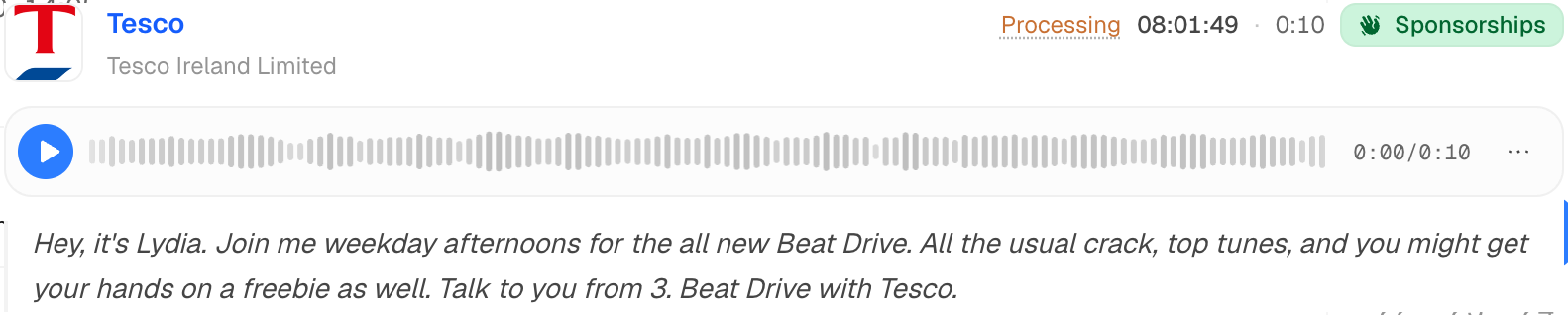
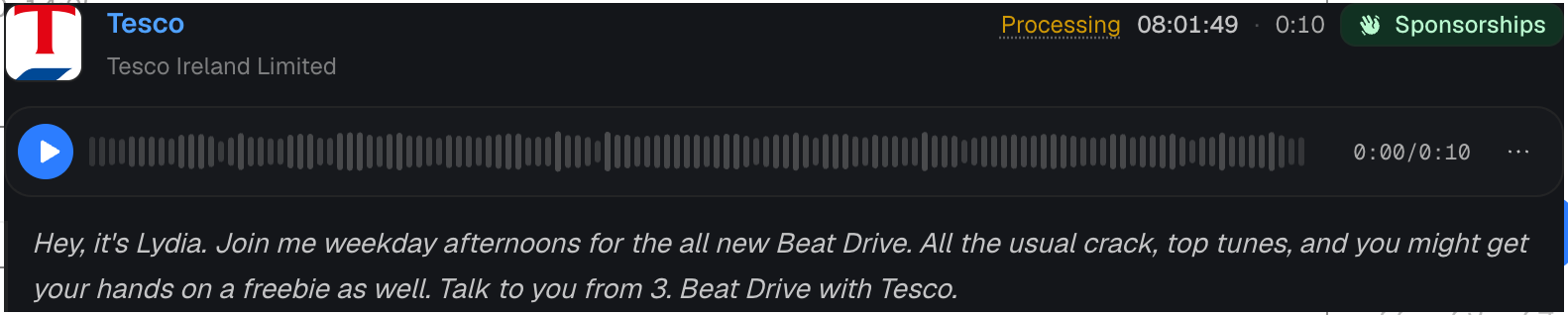
A brand sponsoring a podcast has already committed budget to audio - the warmest signal a broadcast seller can get, and the easiest one to miss. The engine that tells live reads, sponsor tags and spots apart on radio does the same in podcast feeds: transcript, audio, advertiser, estimated spend. Then Spotwise does the work that follows.






What it is
One engine. Every audio channel.
Podcast ad monitoring is the automated tracking of advertising inside podcast episodes - which brands sponsor which shows, in which formats, and how their campaigns evolve.
The advertiser does not think in channels - they think in audiences. A brand running host-read podcast ads is the same buyer your sellers pitch radio to, already convinced that audio works. Host-reads are conversational, unpredictable, and nearly impossible to track across a show library by listening manually.
Spotwise solves the hard version of this problem: spots, sponsorships and live reads detected around the clock, transcribed and classified as they air. Podcast episodes run through the same engine on release, so the same structured record lands in the same place, and the same workflows act on it.
- Episode ingestion
Where radio means live broadcast, podcast means published episodes. Spotwise processes new episodes from the feeds that matter in your market as they are released.
- Ad detection, including host-reads
Pre-roll follows a pattern. The Spotwise engine is built for irregular, spoken-word formats - host-reads and branded segments included.
- Brand attribution and transcription
Each placement is transcribed, attributed to the sponsoring brand and legal entity, classified by category and format, and filed in your searchable library.
- Then the work follows
If it runs off what airs, it can be a workflow. New sponsors are checked against your CRM, the decision maker is found, and an approach is drafted for a human to approve before anything is sent.
Capabilities
From the read to the deal.
Detection is where it starts. Everything your team needs to act on a podcast sponsorship sits in the same system as radio and TV.
- Feed-level coverage
- Monitoring scoped to the shows that matter to your market, not a generic global index. Coverage is added market by market; ask us about your shows.
- Host-read detection
- Conversational endorsements, sponsored segments and produced inserts alike, each told apart and classified by format.
- New-sponsor alerts
- The alert rules your team uses for radio brands and keywords cover podcast too, so a brand entering audio through a sponsorship surfaces in Slack or Teams before it becomes common knowledge.
- Cross-channel view
- Radio, TV and podcast activity for the same brand, in one record. Your team pitches the full audio picture, not half of it.
Who it serves
Built for sellers who think in audio, not channels.
Radio sales teams selling podcast
If your group sells podcast alongside broadcast, you need to see where prospects already spend across both. Podcast signals complete the picture your radio monitoring already paints.
Commercial leadership
Budget is moving into podcast year over year. Leaders who can see that movement - which categories, which shows, which brands - set strategy on data, not on the trade press.
Multi-market broadcast groups
One engine, one record per buyer, one methodology across radio, TV and podcasts, in every market you monitor.
Why it matters
The warmest leads are already buying audio.
Catch advertisers early in their audio journey
Many brands start in podcast before they ever buy broadcast. Seeing those sponsorships means reaching an advertiser already sold on audio, before your competitors know they exist.
Pitch the whole audio footprint
Converged audio deals go to the seller who can speak to a brand’s entire presence. Cross-channel intelligence is the difference between a rate-card pitch and a strategic one.
No manual show-by-show research
Tracking sponsorships by listening to episodes does not scale past a handful of shows. Automated detection gives your team coverage no amount of manual listening can.
Proof the client can watch
You send a link and the client sees every read that ran, with audio and placement. Post-campaign reports go out automatically, no month-old spreadsheet.
See it on your shows
Bring the feeds you compete with.
Start a pilot and we will run Spotwise against the shows and stations you compete with, with KPIs agreed in writing before it begins.
Common questions
What teams ask about podcast monitoring.
Related solutions
Every format in your market
Hear every read. Act on it the same day.
Somewhere in a podcast feed, a brand your team has never called is committing budget to audio. Pilot first, KPIs in writing, no lock-in at the front.