.svg?v=2026-07-29T07%3A18%3A55.665Z)

Share of voice
Live todayShare of voice you can trust.
Most share numbers fail the same way: the tool catches 30s and 60s spots, groups sponsorships and live reads in with them, and leaves somebody to de-couple the formats by hand before anyone will quote the figure. Spotwise detects every format and keeps them apart - spots, sponsorships and live reads counted separately, direct buys separated from agency buys - so share of voice is one number your team can put in front of a client.
What it is
The number, and the detections behind it.
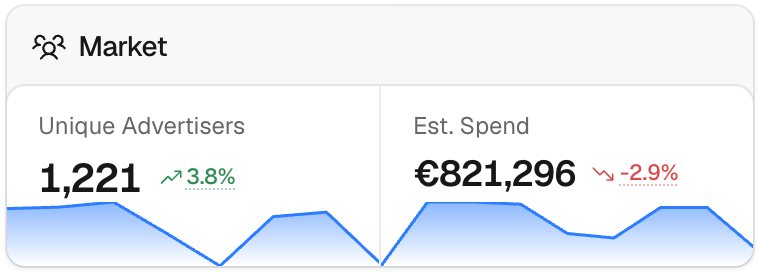
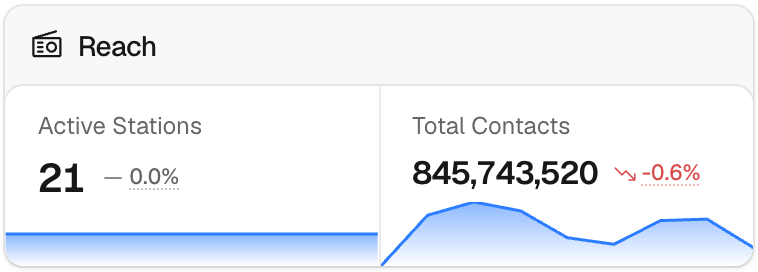
Share of voice is the proportion of a market, a category or a station group that an advertiser holds. It is only useful if the formats underneath it are counted correctly.
The reason share of voice gets argued about is the de-coupling problem. A tool built around produced spots catches 30s and 60s reliably and then treats a sponsorship billboard or a live read as if it were the same unit, or misses it altogether. Whoever presents the number ends up separating the formats manually first, which is slow, and the result is a figure that every side of the table can dispute.
Spotwise was built on the harder formats. Sponsorships and live reads are detected as themselves, classified as themselves, and counted as themselves - so share can be read by format, by category, by station and by period without anyone rebuilding the base. Each detection also carries its buy type, direct or agency, which means the same share view answers who holds the market and how they bought it.
- Detect every format
Produced spots, sponsorships and live reads across your monitored stations, plus TV and podcasts on the same engine. Every detection carries its transcript, its audio and its timestamp.
- Classify before counting
Each detection is classified by format, by advertiser, by category and by buy type - direct or agency - before it enters any share calculation. Nothing is grouped that should not be.
- Compute share
Share of voice by advertiser, category, station and period, readable per format or combined. Because the classification sits on the detection, you change the cut without recomputing the base.
- Show the working
Every share figure drills back to the detections that produced it - the ad, the station, the time, the audio. When a client questions the number, you answer with the evidence rather than the methodology slide.
- Then the workflow runs
A share-drop alert, an agency-share movement, a predicted buy from a category ramping up - the alert fires in Slack or Teams, the affected advertisers are pulled, outreach is drafted, and the CRM record updates once a human approves. Describe the check in plain language, approve the plan Spotty builds, and it runs on schedule. If it runs off what airs, it can be a workflow.
Capabilities
Numbers your sellers can stand behind.
A share figure is only worth quoting if the person quoting it can defend how it was counted.
- Format-separated share
- Spots, sponsorships and live reads counted as distinct formats. Read share per format or combined, without anyone de-coupling a spreadsheet first.
- Direct and agency share, side by side
- Every detection carries its buy type, so the same view shows who holds the category and how much of it comes through agencies. Deeper on the agency side: see agency share tracking.
- Share by category and station
- Which categories dominate your market, which are underweight on your stations, and how each advertiser sits against its own category over any monitored period.
- Share-drop alerts and predicted buys
- Alert rules on the movements that matter: your share slipping below a threshold in a category, a client starting to experiment with a rival, a pattern that says a buy is coming. Delivered in Slack or Teams.
Who it serves
For everyone who has to defend the number.
Commercial directors & revenue leaders
Report share in the same shape every month, computed the same way, traceable to what aired. Category calls and inventory decisions made on a base nobody has re-cut by hand.
Sellers in a share conversation
Walk into the meeting with the prospect’s category share, format by format, and the detections to back each line. A share argument that survives the client’s own agency checking it.
Research & strategy teams
Track category share over any monitored period without rebuilding the data set. Formats stay separated, so a year-on-year comparison compares the same things.
Why it matters
A disputed number is worse than no number.
End the manual de-coupling
If a person has to split sponsorships out of spots before anyone will use the figure, the tool has handed you homework, not intelligence. Spotwise counts the formats apart from the start.
Quote share without flinching
Every figure drills back to detections with audio and timestamps. When a client or their agency pushes back, your seller opens the evidence instead of defending a methodology.
See the share move while it is moving
Share shifts show up in what airs long before they show up in revenue. Continuous computation means a slip in a category reaches your team as an alert, not as a quarterly surprise.
Share that turns into outreach
Every monitoring tool stops at the report. Here a share movement becomes a pulled account list, a drafted first touch and a CRM record, with a human approving before anything is sent.
See it live
Your market share, counted properly.
Start a pilot and we will compute share of voice on your own stations and categories - formats separated, detections attached - then show the workflow that acts when it moves.
Common questions
What teams ask about share of voice.
Related solutions
The share is moving now
Stop de-coupling the data. Act on it.
Somewhere in your market your share slipped this week, in a format your current report groups away. Spotwise counts it properly, flags the move, drafts the outreach, and updates the CRM once your seller approves.